


Gallery
Click images to enlarge


Research and Development program was established to meet the corporate needs of the company in its forestry businesses. In order to optimize wood requirements and natural growing conditions, the company has begun to explore the potential of a genetically improved seed base by using progeny test and species trials.
1. Nursery
The main purpose of developing a nursery is to prepare superior seedling which will ultimately result in better crops. The company mantains both permanent and semi-permanent nurseries so that planting needs can be met directly by locally produced seedlings. The emphasis is on raising seedlings which are suitable for the majority of the planting area. The seedlings which are cultivated include local superior species which exhibit a fast growth rate.
Seeds and seedlings are collected from designated seed orchad areas and also from cutting matterials unit.
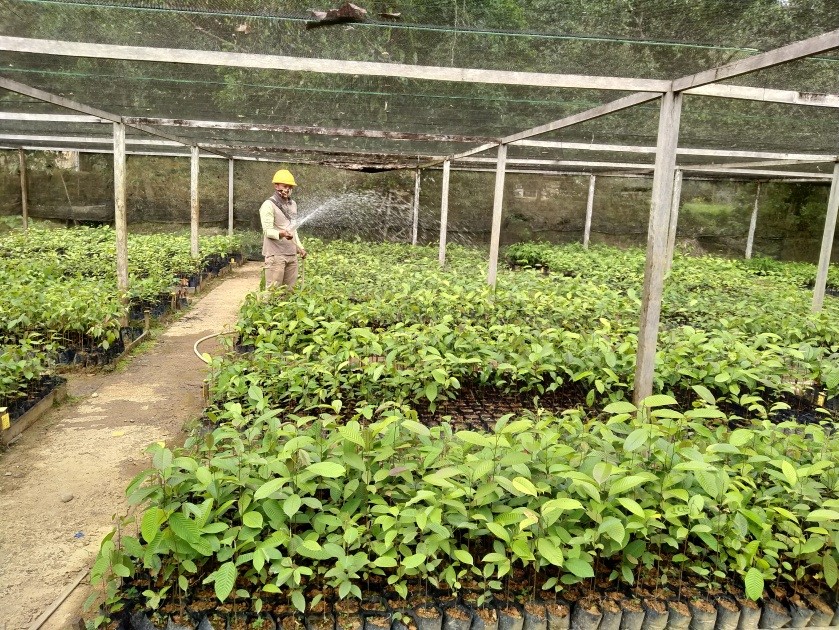
PT. ED produced ± 320.000 seedlings per year
2. Progeny Test
The company has established Progeny Trial using Shorea leprosula and Shorea parvifolia sourced from four different areas of Kalimantan : lower part Seruyan river (Central Kalimantan of PT. Sarpatim), lower part Rawan river (West Kalimantan of PT. Suka Jaya Makmur), upper part Katingan river (Central Kalimantan of PT. Sari Bumi Kusuma) and upper part Seruyan river (PT. Erna Djuliawati location).
Preliminary results of the progeny test indicated that seeds from working area of PT. ED perform better growth compared to seeds from other different areas of the companies.
The future step is trial the trees resulting from the best shoot cuttings and many tests that are still quite long under the guidance of Tree Breeding Experts to obtain Clone Gardens as a source of superior seeds to be planted in the working area of the company.
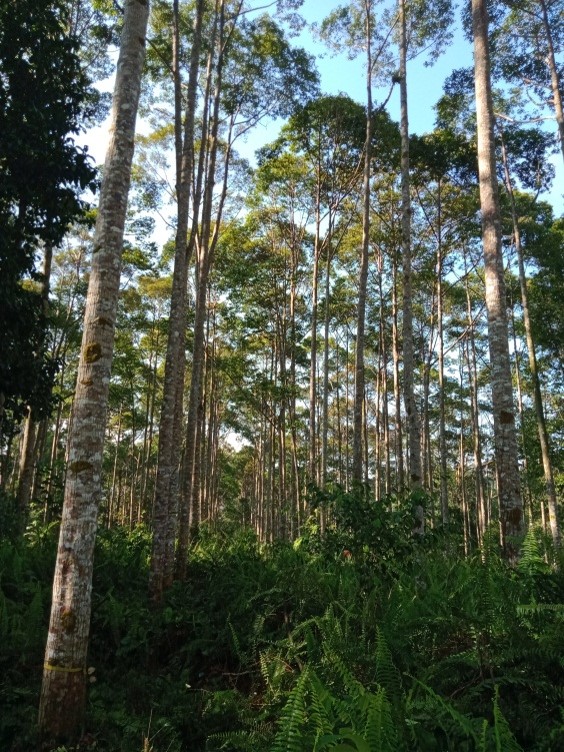
Progeny Test Area2
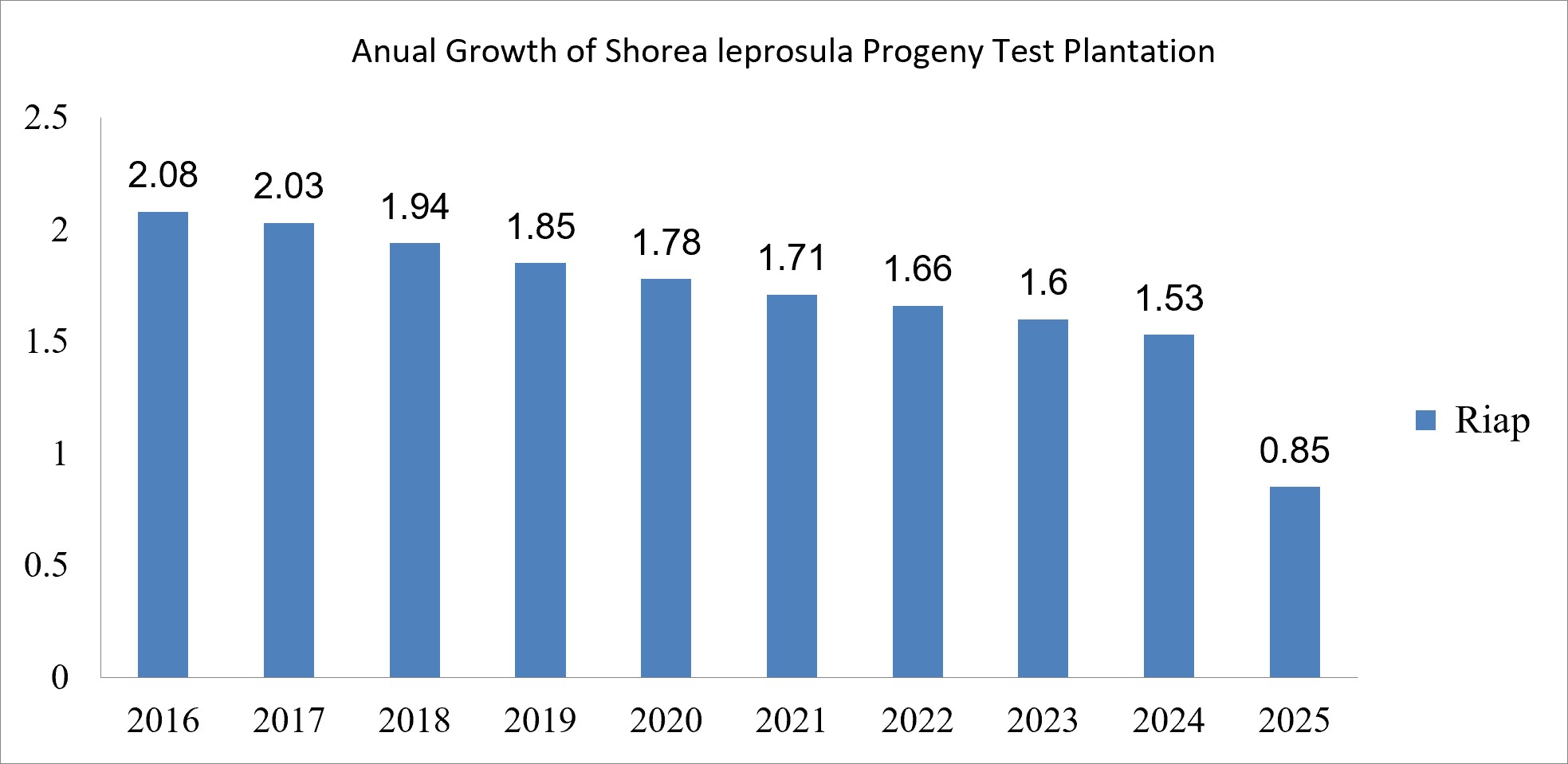
Chart 1. Diamater Increament (riap) of Shorea leprosula in Progeny Test 2016 - 2025.
3. Species Trial
Species trial aim to evaluate the rate of growth of the different species. The company established species trials using 20 Dipterocarp specieses. From the initial results of the species trials five of the fastest growing species in diameter and height were selected, : S. leprosula, S. parvifolia, S. platoclados, S. scaberima, S. Johoriensis and S. macrophila.
The Species trial see at Chart 2. Shorea macrophyla shows the species with the highest diameter increment (1.77 – 2.07 cm/year)
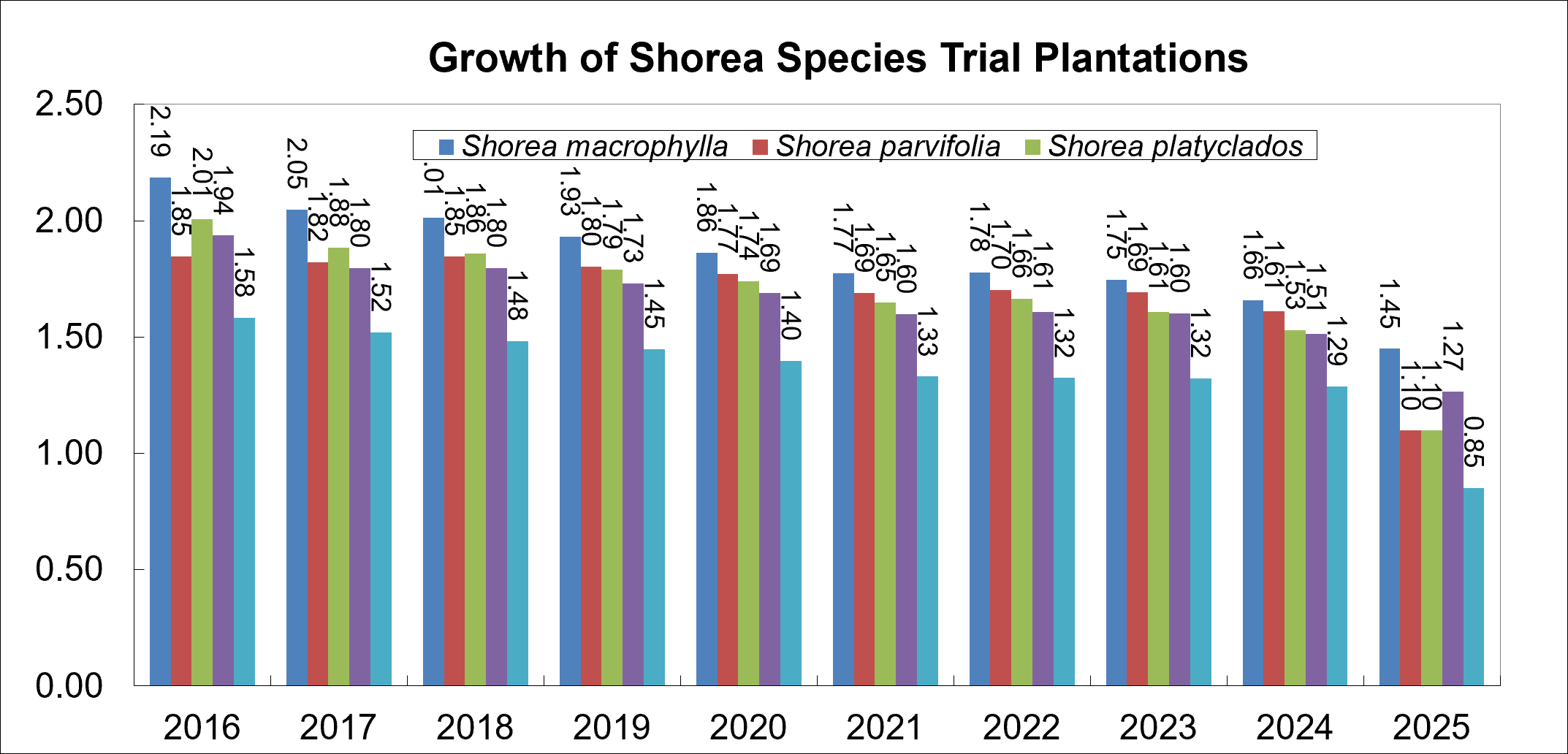
Chart 2. Species Trials Test of Shorea spp from 2016 - 2024
4. Eroded Soil Observation
PT. ED has been monitoring soil erosion by measuring the rate of erosion in logged-over areas and the Bukit Beruang Protected Area as a observation control.
Observation of the soil erosion rate starting 2012 to 2021, the result was that the erosion rate in the RKT area which was being harvested longer, the erosion rate tended to decrease and achieved to a stable condition of 0.52 tons/ha/year compared to control observation in Bukit Beruang protected area with an erosion rate of 0.36 ton/ha/year, see Chart 3.
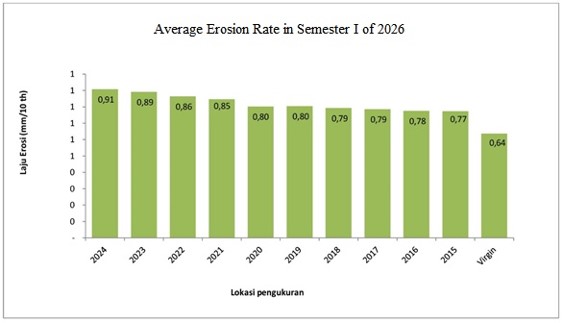
Chart 3. Erosion Rate in PT. ED's area from 2015 to 2024
5. Endanger Wildlife Monitor
The existence of a biodiversity of flora and abundance of wildlife indicates the level of stability forest management in the working area of PT. ED. Based on wildlife analysis (Analisis Satwa) monitor from 2012 until 2021, population of endanger wildlife shows the stable existence, figured the at the following Chart 4.
Note:
o Kelempiau (Hylobates muelleri) population tend to rise over time
o Orangutan (Pongo pigmaeus) population almost stable but not abundant because the concession area is trajectory only.
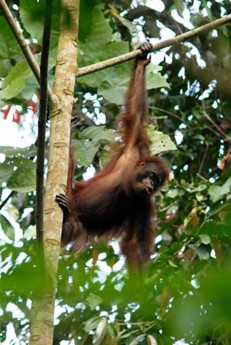
Orangutan (Pongo pygmaeus)
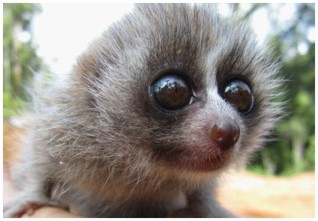
Kukang Kalimantan (Nycticebus menagensis)
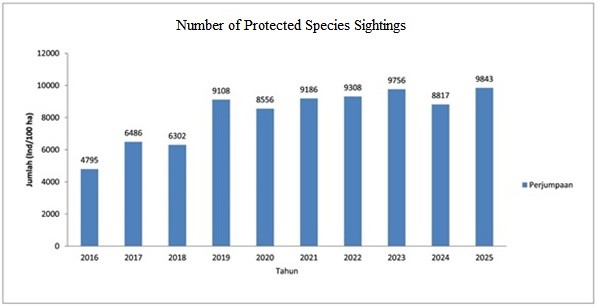
Chart 4. Observation of Endemic species of Endanger Wildlife 2016 - 2025
6. Vegetative Observation
Based on the inventory of 2021, the tree species abundance index shown on the Chart 5, Biodiversity of tree species populations are very abundant in the concession.
Based on the latest vegetation inventory (Anveg) (2021), the result of vegetation analysis, it shows that the index of species diversity, species abundance and evenness of tree species in PT. ED can be checked in Chart 5.
The chart shows that the biodiversity, richness or population of species is very abundant and evenness species in the working area of PT. Erna Djuliawati is quite steady.
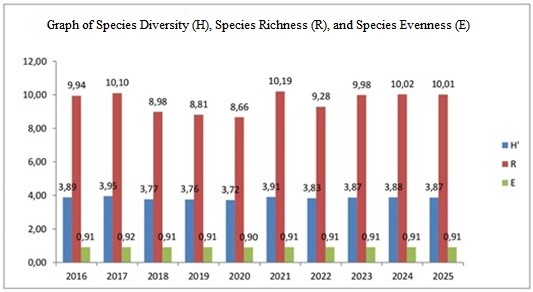
Chart 5. Biodiversity Tree Species in the Concession Area
7. Rainfall Monitoring
Based on the rainfall and rainy day monitoring from 2012 - 2021, PT. Erna Djuliawati included to A Type of Schmid & Ferguson Climate which is average annual rainfall more than 2.367 mm, it means an average rainfall of more than 100 mm/month and extremely weather occurred in 2020 and 2021 with the rainfall shown more tha 4.000 mm, see on the Chart 6.
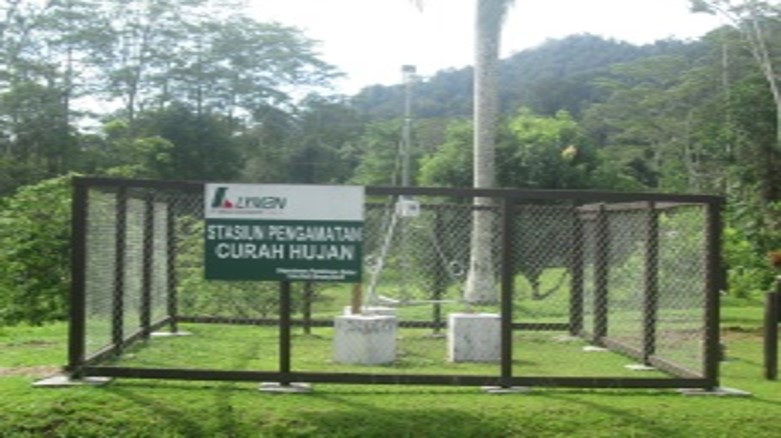
Rain gauges station in Km 95 Basecamp PT. ED
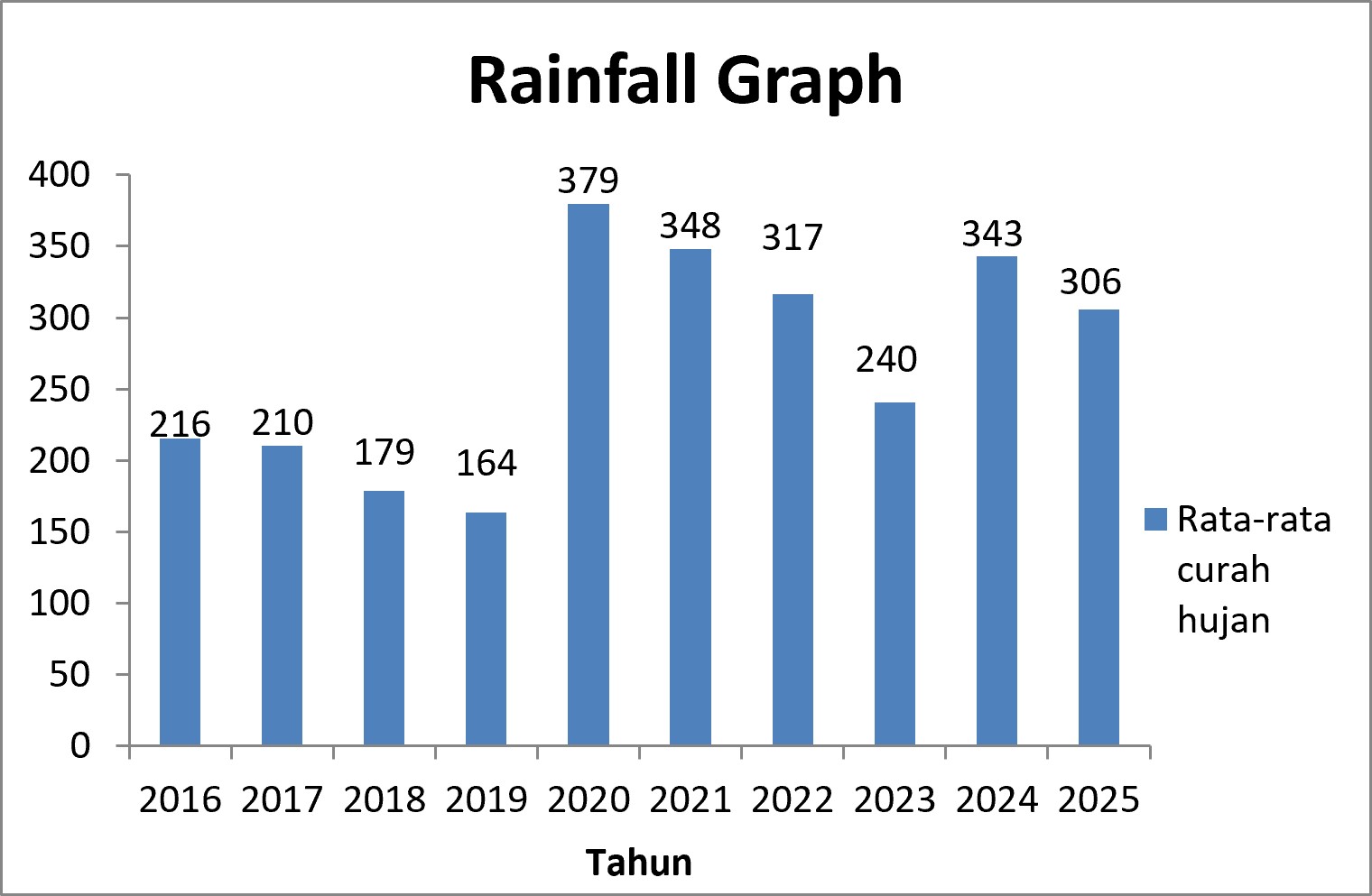
Chart 6. Rainfall Recording
Climate type calculations according to Schmidt-Ferguson use the Q value formula based on the comparison between the average number of dry months and the average number of wet months over a period (over 10 years).
1. Monthly Rainfall CriteriaMonthly rainfall is classified into three categories:
a) Dry Months (DM) : rainfall less than 60 mm per month.
b) Humid Months (HM) : rainfall between 60 and 100 mm per month. (Note: Humid months are not included in the Q formula).
c) Wet Months (WM) : rainfall greater than 100 mm per month.
2. Calculation Formula for the (Q) Value to Determine Climate Type
Q = {Average Dry Months} divided by {Average Wet Months} x 100%
(Or without multiplying by 100%, where the (Q) value range uses decimals)
According to Schmidt-Ferguson, the Q value in the PT Erna Djuliawati working area based on rainfall recording from 2016 to 2025 was less than 14.3%, categorizing it as Climate Type A (Very Wet Climate Type).
This website updated on November 2026.To continuously improve our forest management capabilities, we welcome your feedback, suggestions, and constructive comments. Please feel free to share them with us by clicking the "Contacts" button below.